ReMe is a community-based mobile app where users can discover, share, and learn from upcycling inspiration and tutorials all in one place.
Project Overview
Fast fashion has created a clothing waste crisis, but most people who want to upcycle don't know where to start. Existing resources are scattered across multiple platforms, making it hard to find reliable, beginner-friendly guidance in one place.
Problem
Solution
ReMe brings inspiration and step-by-step tutorials together in a single app, designed for users of all skill levels so that getting started with upcycling feels approachable rather than overwhelming.
Scope
UX research and mobile app development
Timeline
March 2024 - May 2024
Tools
Figma, Miro
Research
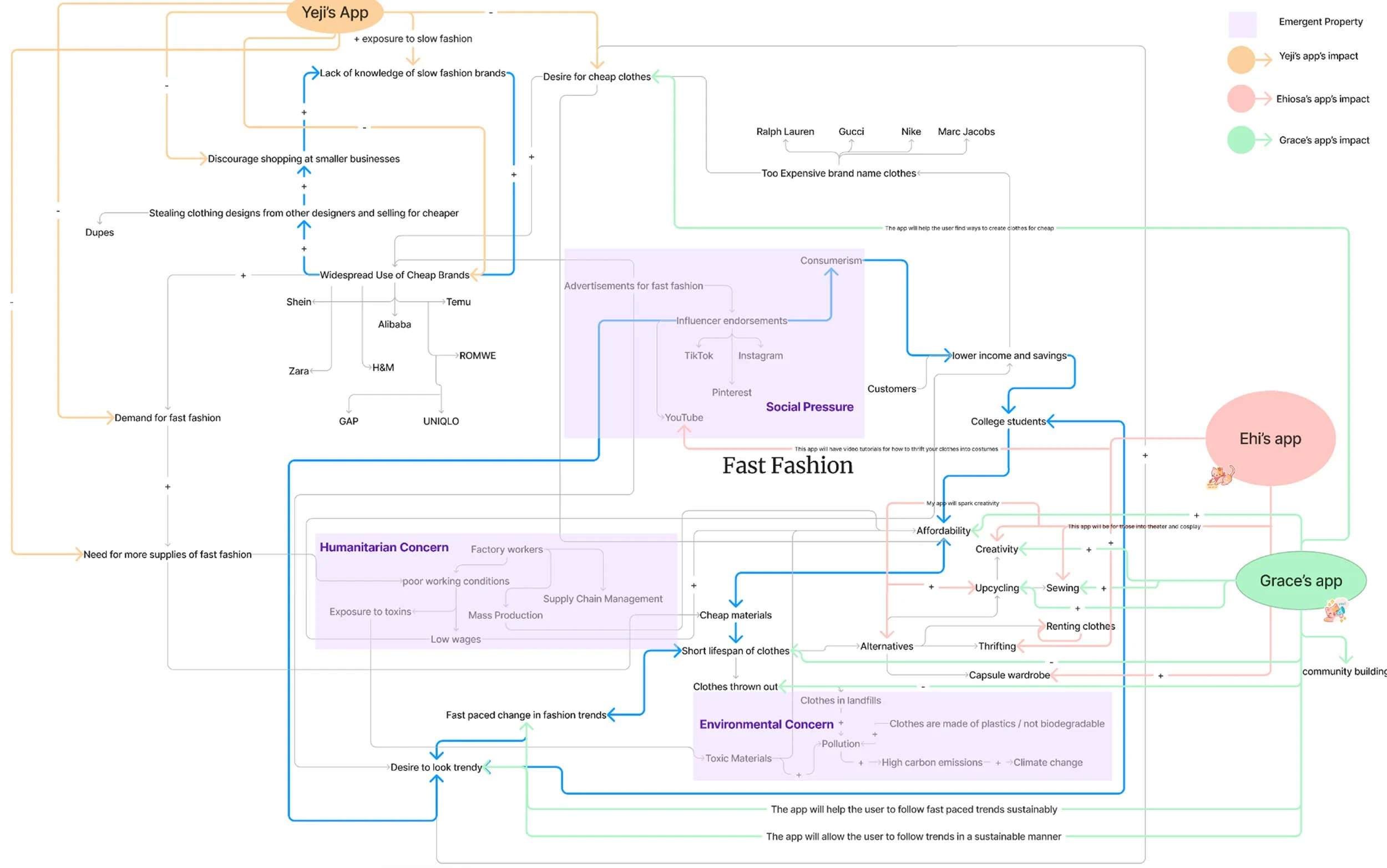
To understand the broader context, I mapped out the fast fashion ecosystem, tracing the relationships between consumerism, environmental impact, social pressure, and the alternatives people turn to. This helped me identify where an app like ReMe could realistically intervene and make a difference.
Topic Systems Map
Problem Statement
Fast fashion has led to more clothing waste, with many items ending up in landfills. While upcycling can reduce this, beginners often find it overwhelming and don’t know where to start.
Research Question
How can designing an app that offers both upcycling inspiration and tutorials encourage individuals with ranging sewing skill levels to repurpose their old clothes instead of throwing them out?
I conducted 5 in-person interviews with participants ranging from novice to experienced in sewing ability. I asked questions about their fashion habits, clothing choices, existing knowledge of upcycling, and what would make them more likely to try it.
User interviews
Across all participants, three consistent needs emerged:
Video tutorials to learn sewing techniques at their own pace
Visual inspiration to browse and spark ideas
A community to share their work and connect with other upcyclers
Both beginners and experienced sewers said they would use the app. Beginners to learn and experienced users to find new ideas and share their work. This confirmed that designing for a range of skill levels was the right call.
Key FIndings
Key Insight from research
The barrier to upcycling is not a lack of interest, it is a lack of accessible, consolidated resources. People want to repurpose their clothes but feel overwhelmed piecing together guidance from YouTube, Pinterest, and TikTok. ReMe's value is bringing all of that into one place.
User persona
Hannah, 21 College student, Champaign IL
Hannah is a graphic design student with intermediate sewing skills who loves fashion and thrifting. She wants to upcycle more but lacks technical knowledge, has no one in her immediate circle to learn from, and needs a centralized place to find inspiration and tutorials she can follow at her own pace.
Painpoints
Doesn't know the technical terms or correct tools for sewing
Has no community or mentor to learn from in person
Goals
Become better at sewing and learn new techniques
Create more personalized, one of a kind pieces
Needs
Video tutorials she can follow step by step
Visual inspiration to spark ideas
Tool and materials recommendations
Desires
A community of people who share her interest in upcycling
A way to save and organize designs she wants to try
Design process
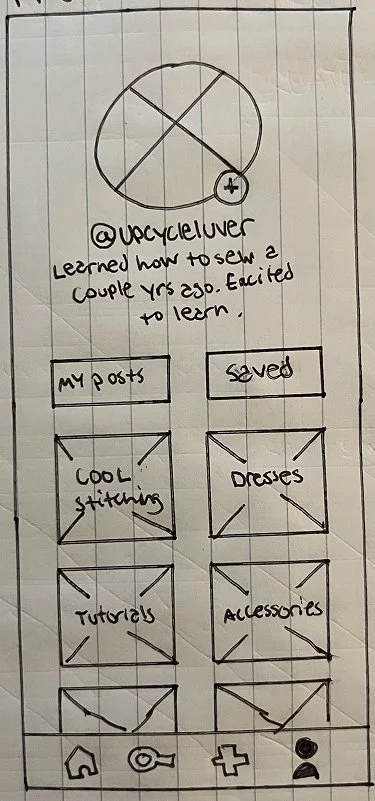
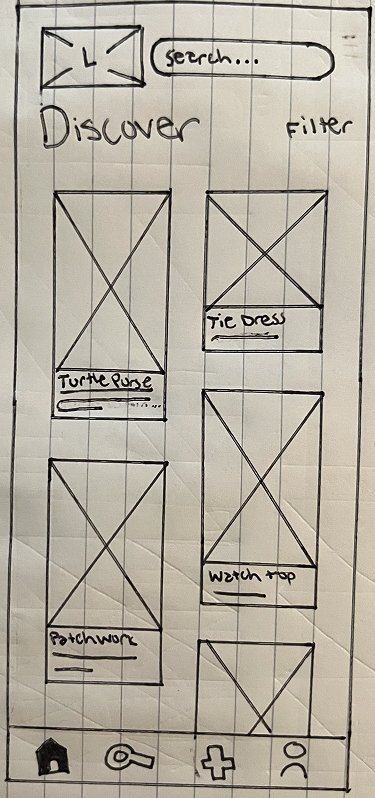
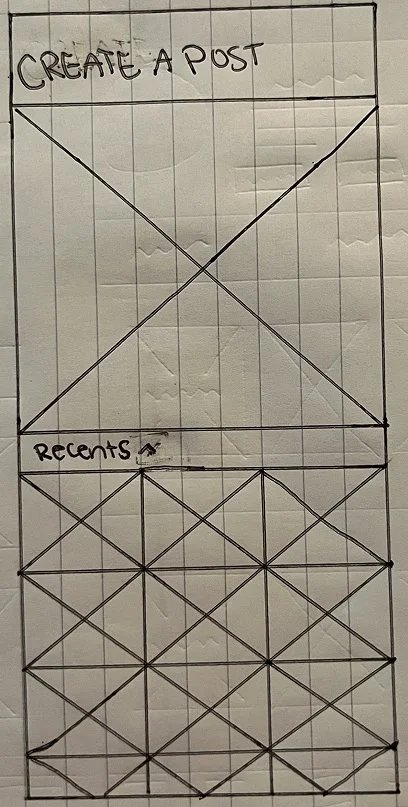
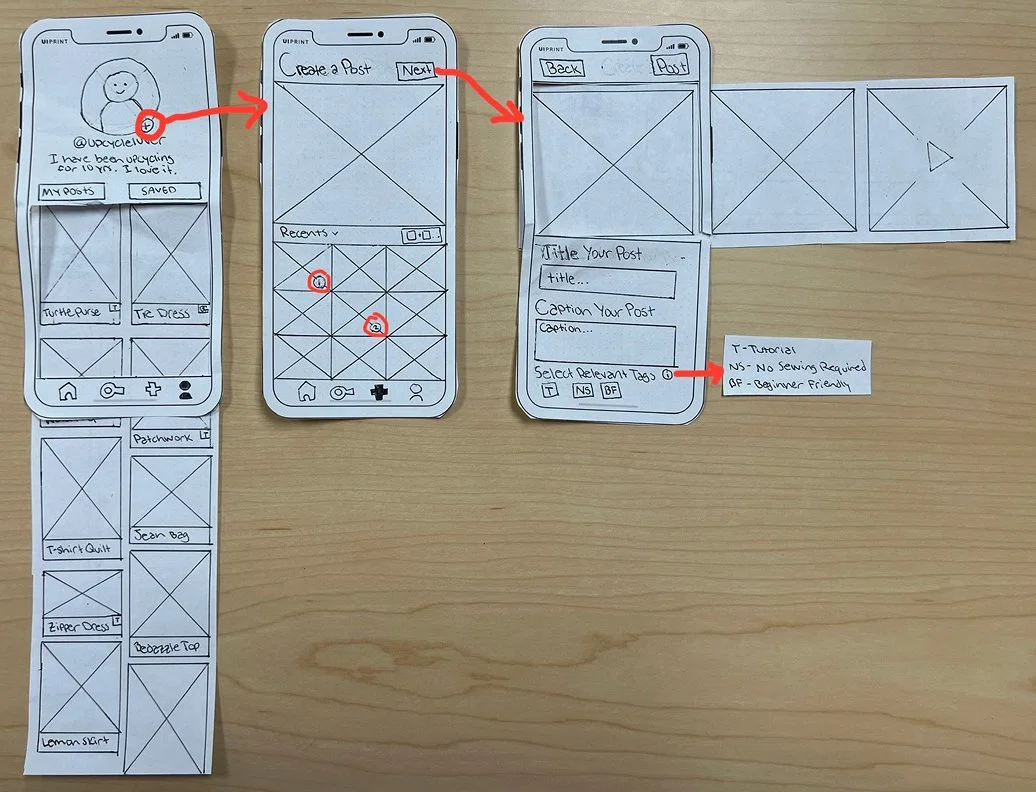
#1 Sketches
#2 Low-fidelity
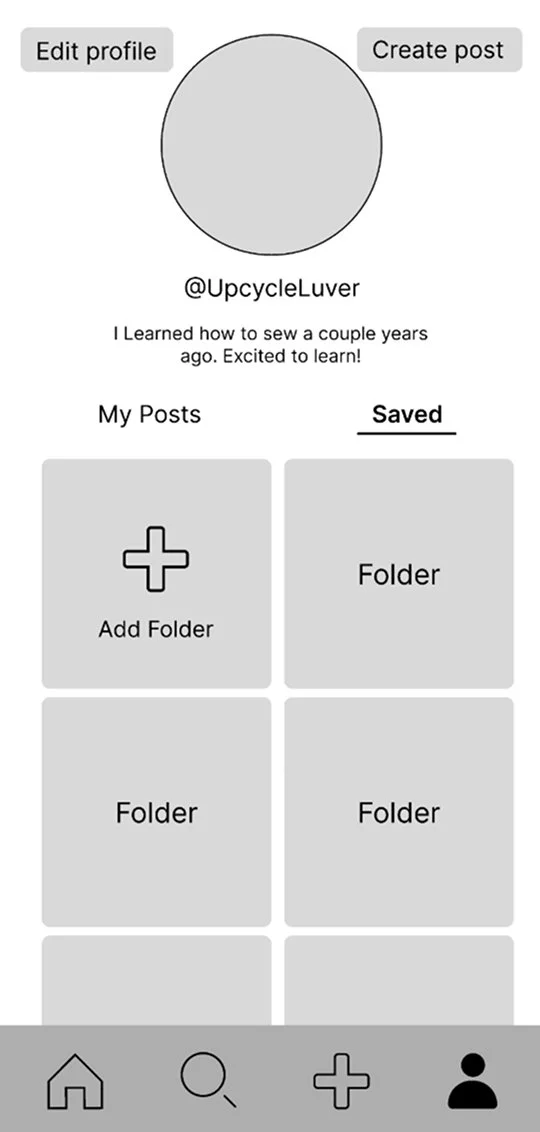
#3 mid-fidelity
From Research to Informed design
Finding →
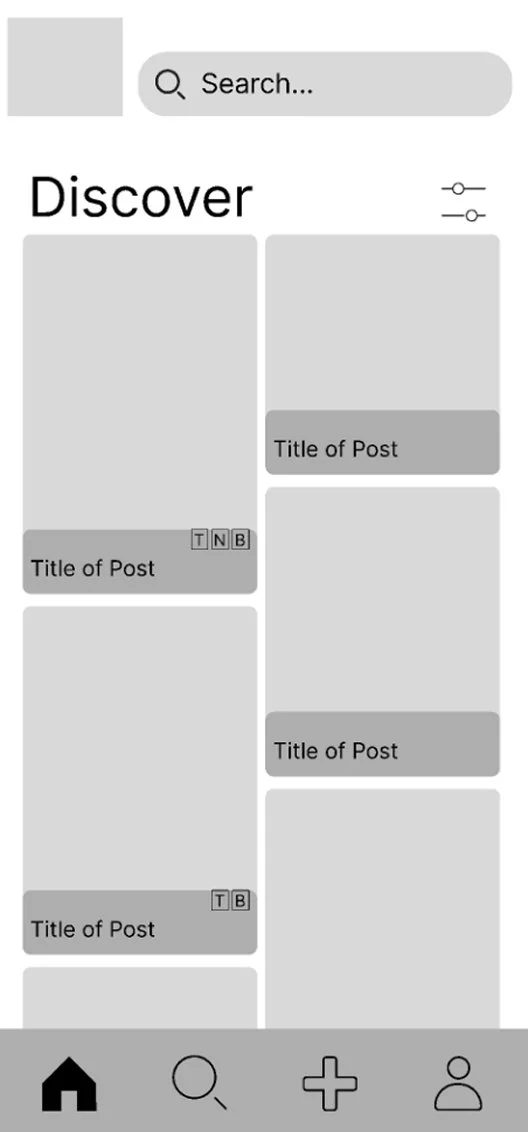
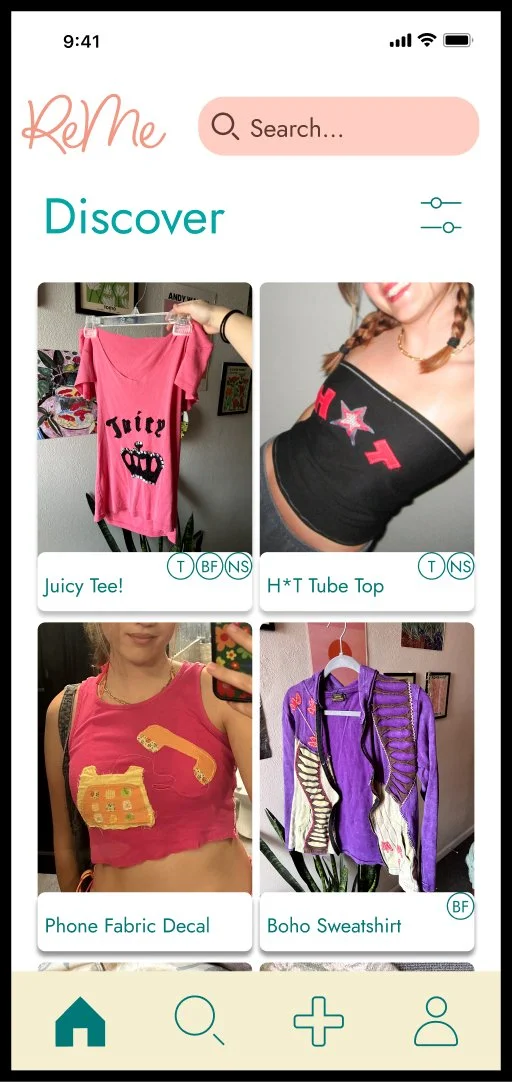
Users wanted visual inspiration to browse
Informed design →
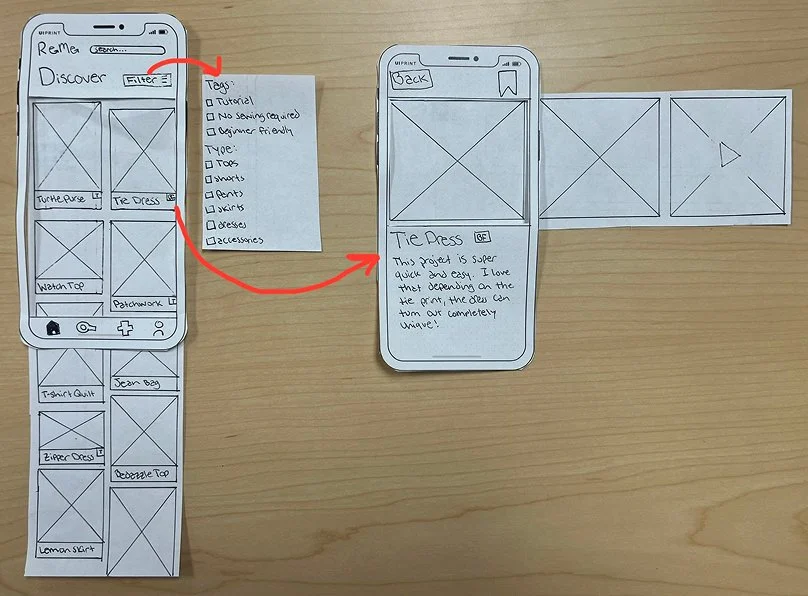
the Discover page is a scrollable, filterable feed of community posts organized visually so users can browse without knowing exactly what they are looking for. The grid layout was a deliberate choice to prioritize images over text, mirroring how people actually seek inspiration on platforms like Pinterest.
The “Discover” page
Finding →
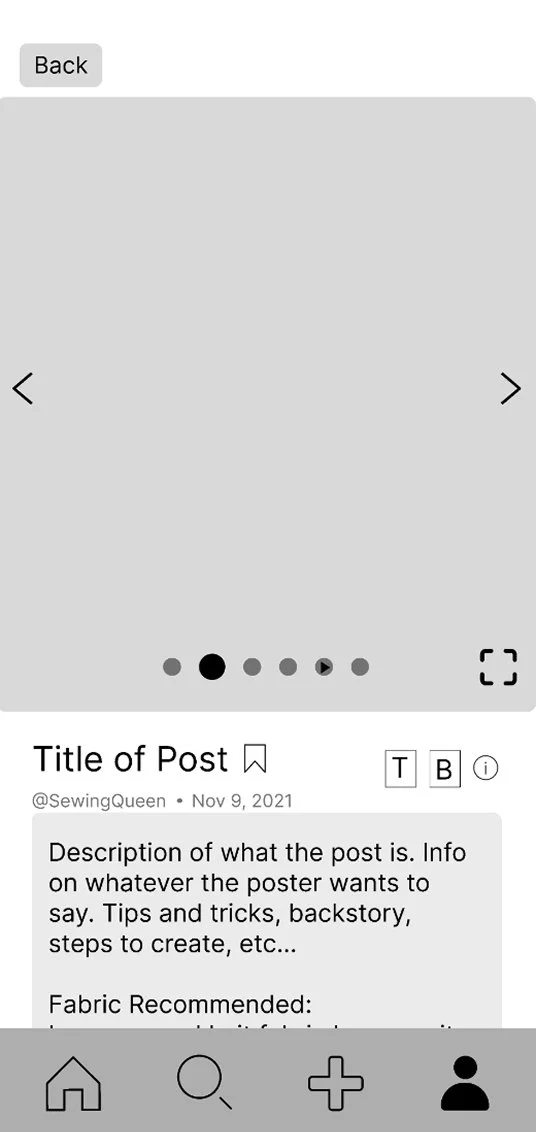
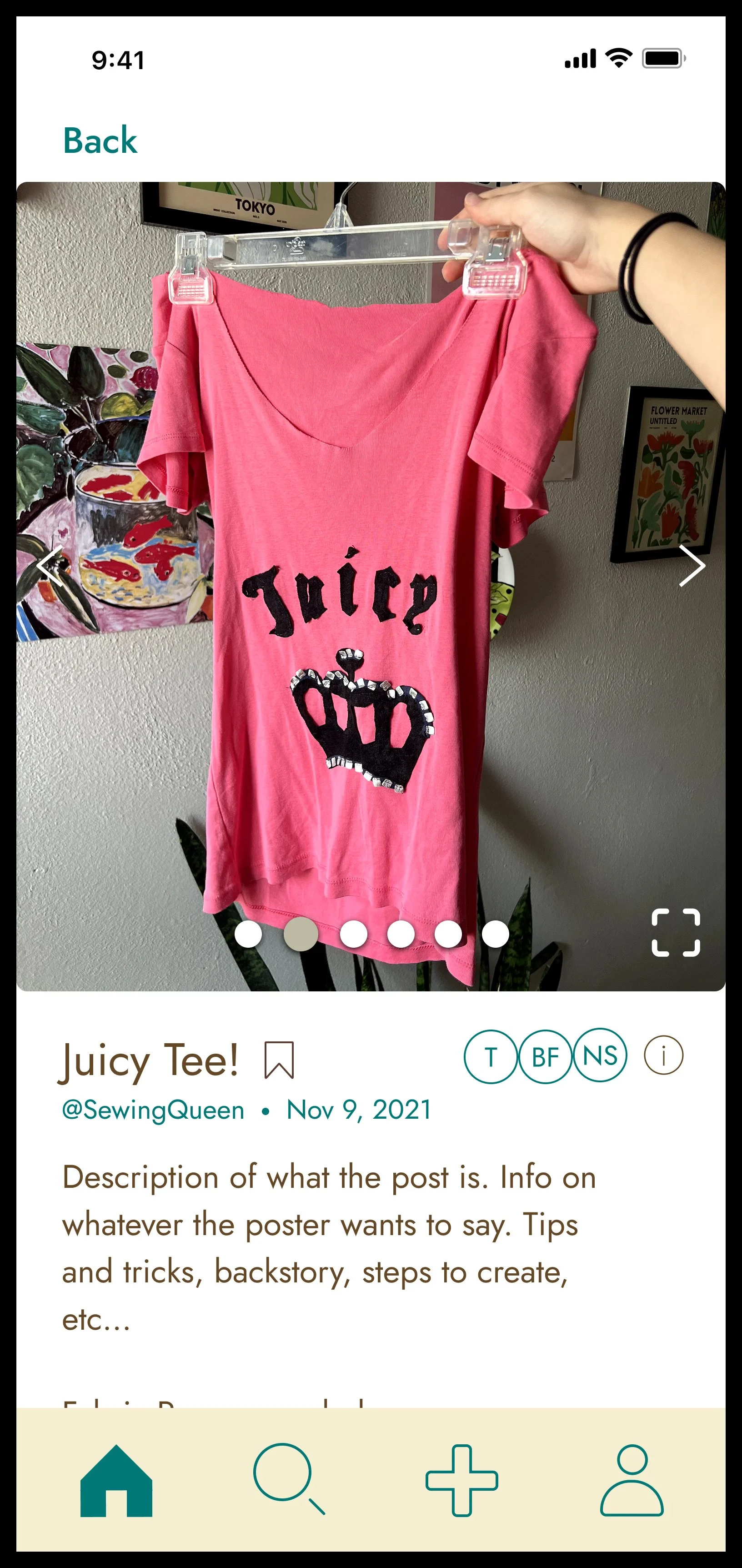
Users wanted tutorials to learn at their own pace
Informed design →
The tutorial format within each post
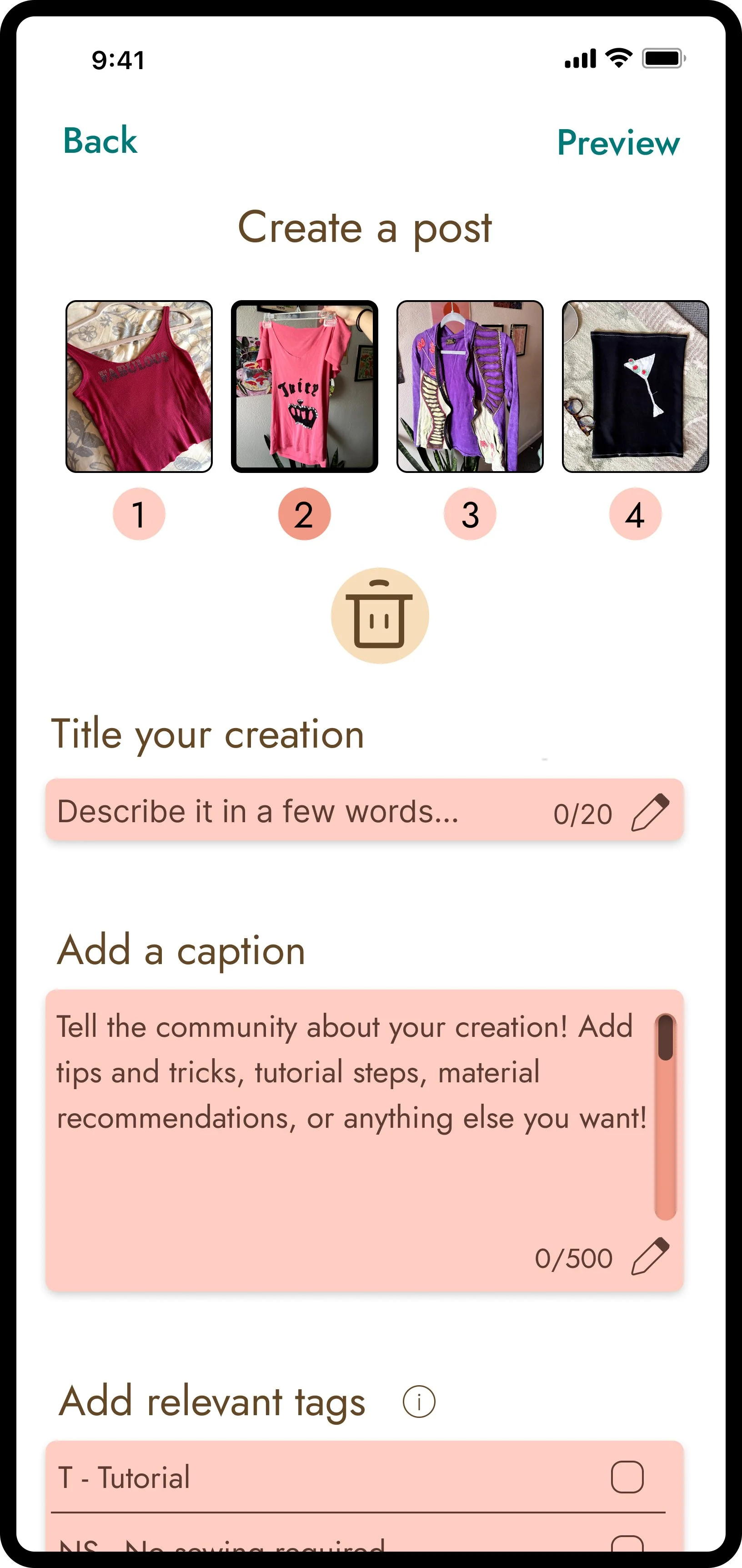
The tutorial format within each post is where creators can include step by step instructions, fabric recommendations, and technique tips alongside their photos. The goal was to make every post both inspiring and actionable.
Finding →
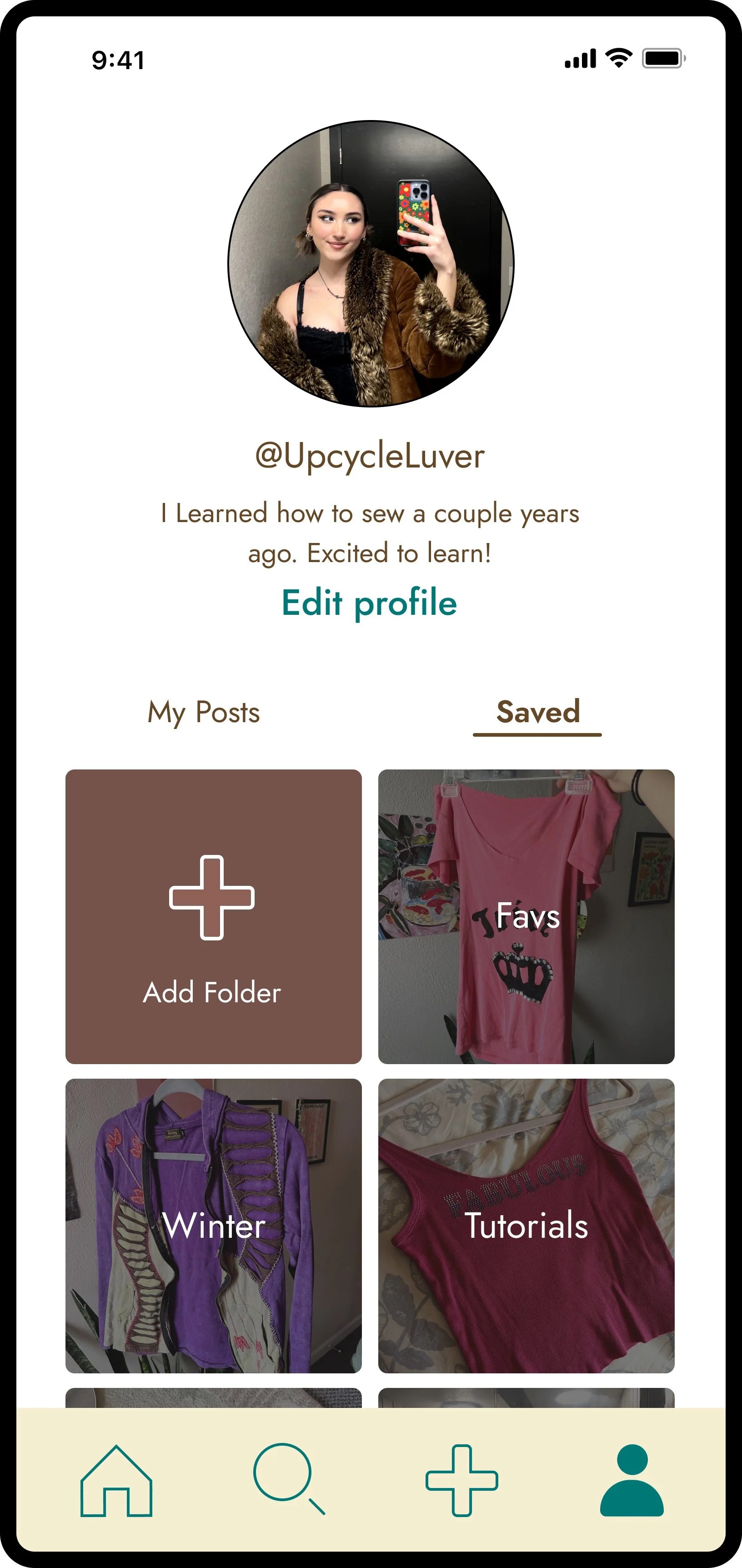
Users wanted a community to share work and connect with others
Informed design →
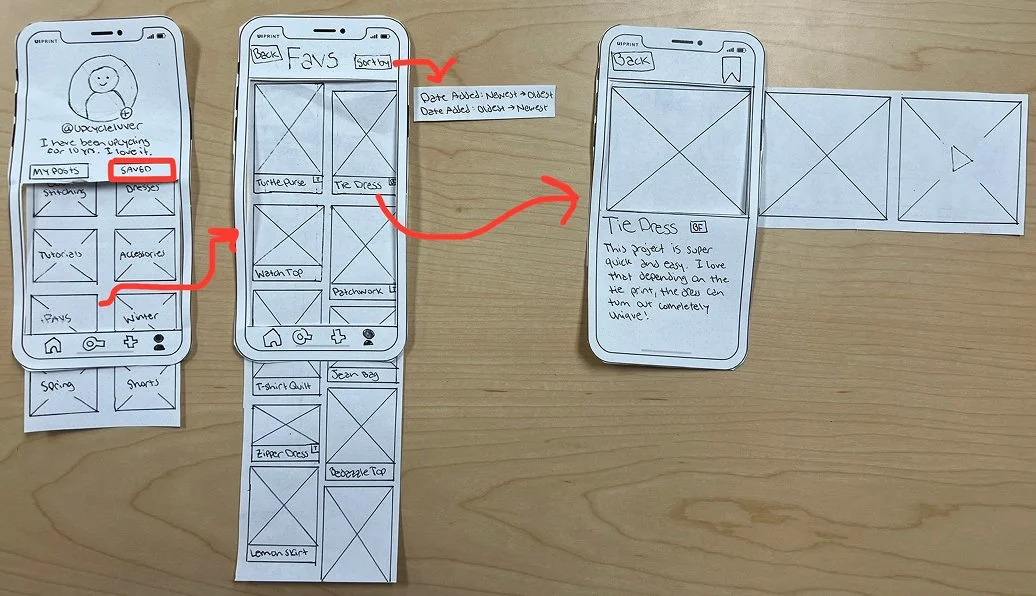
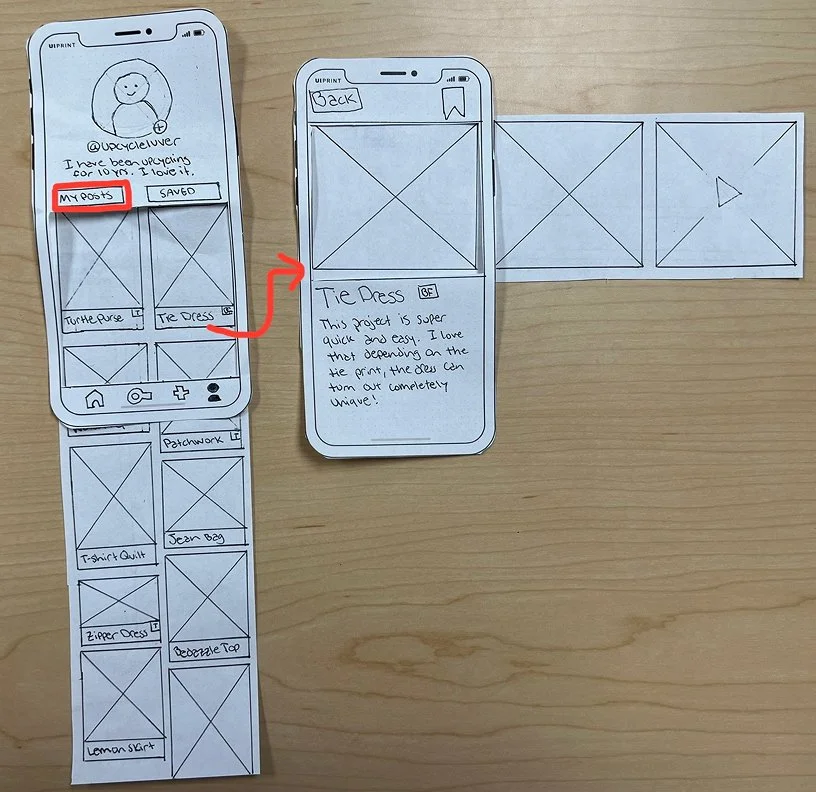
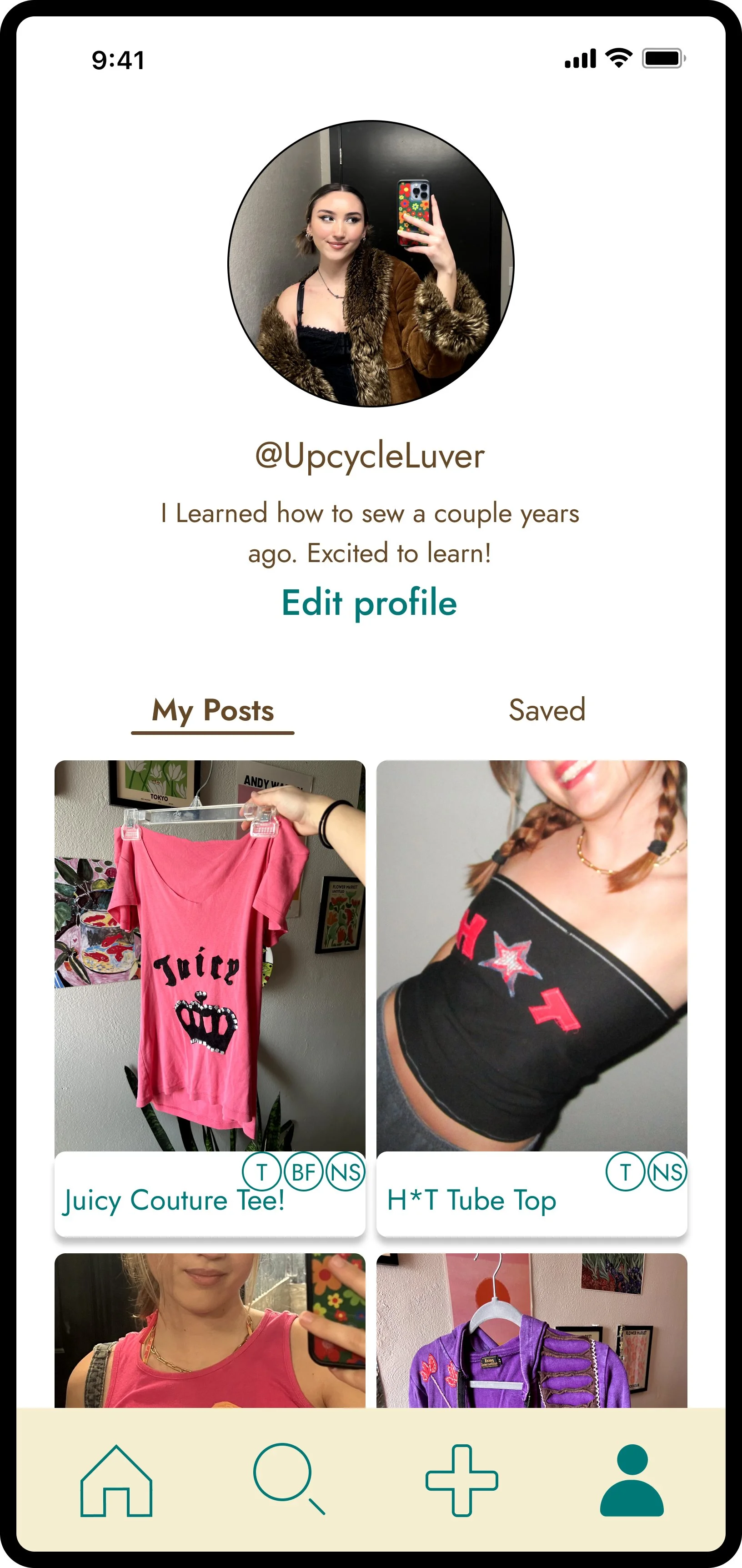
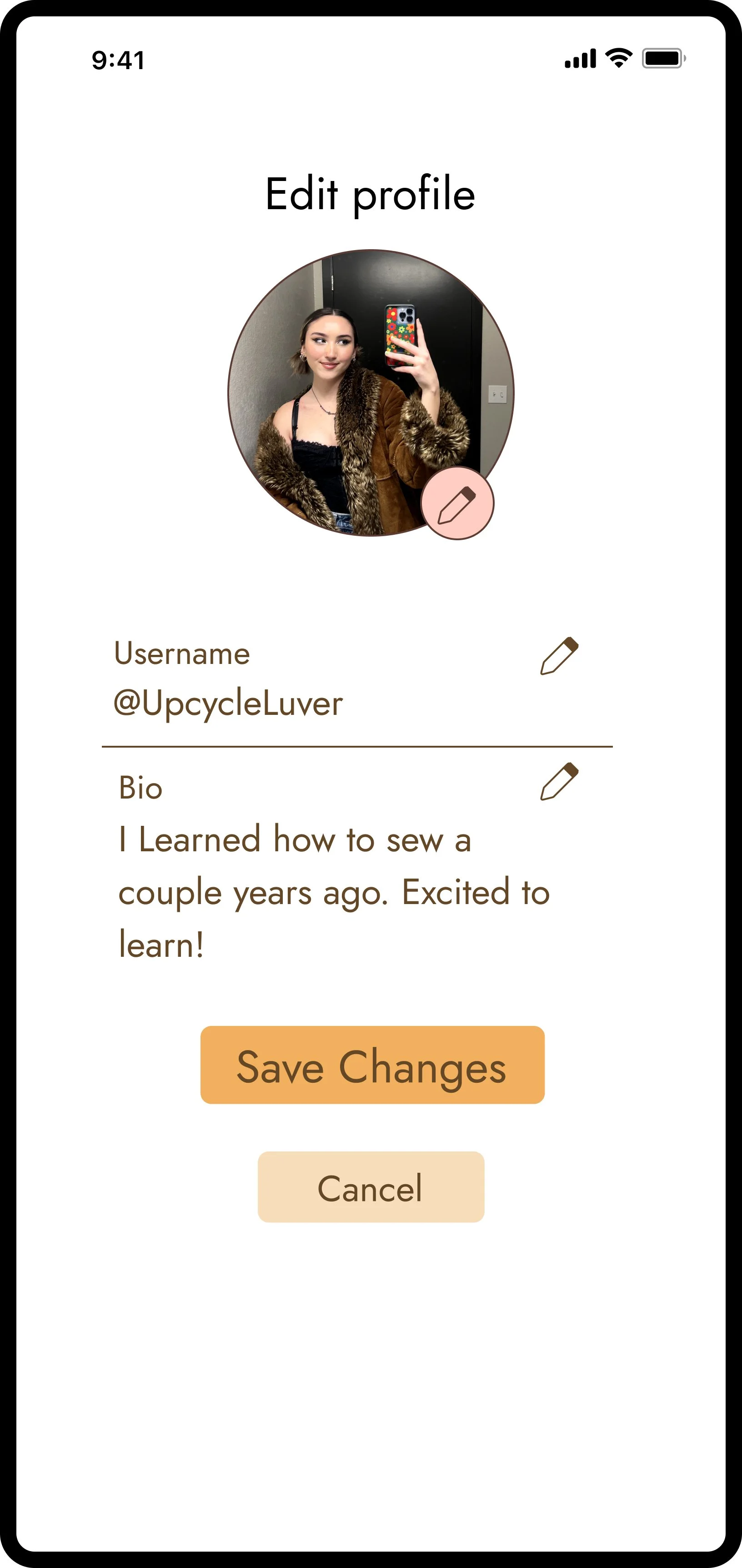
The social layer of the app includes user profiles, the ability to create and share your own posts, and saved folders to organize content you want to come back to. Upcycling can feel isolating when no one around you does it, so building community directly into the app was a deliberate response to that gap.
The social layer of the app
Reflection
The biggest challenge on this project was designing for users with a wide range of skill levels. A complete beginner and an experienced sewer both need to find value in the same app, which meant every feature had to feel accessible without feeling dumbed down for someone more advanced.
This pushed me to think carefully about how content is organized and labeled, so users could self-select the level of content that was relevant to them rather than feeling like the app was not made for them.
If I did this again I would invest more time in usability testing and competitive research. Seeing how users actually navigate the app would have surfaced friction points I could not spot on my own, and a deeper look at existing platforms would have helped me differentiate ReMe more deliberately.